Evangelia
1968 · Shallow water, stranded
Costinești, a wreck visible from the shore
Published positionDossier
 Black SeaDiving School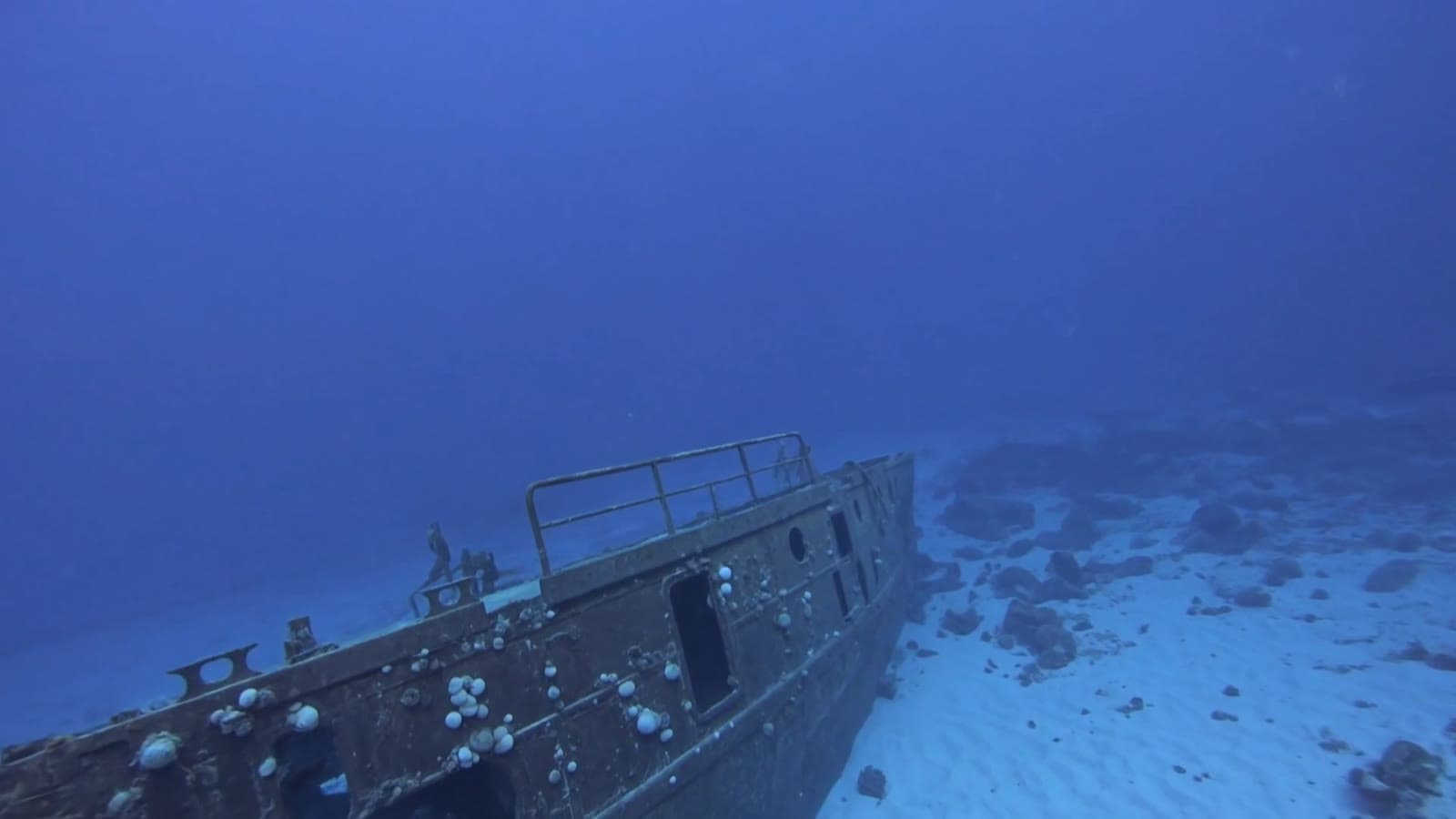
History underwater · The Romanian coast
Beneath the surface, the Romanian coast keeps merchant ships, submarines and unfinished stories. Some wrecks are well known; others are still waiting to be found.
From Tuzla to Vama Veche, every wreck is a historical landmark and a living habitat. A place that asks for training, respect and experience.
An unseen map
Somewhere further south probably lies the tug Lt. Stoicescu, lost by the Royal Romanian Navy in 1941 along with the torpedo boats Viforul and Vijelia and the auxiliary cruiser Carol I, during convoy protection along the western Black Sea coast between Odesa and the Bosphorus.
Interactive atlas
Select a marker for its story, depth and position status. Filter between wrecks within recreational range, technical dives and historic sites.
Published position, well documented
Approximate position on the map
This map is editorial, not nautical. Do not use these points for navigation or dive planning.
1968 · Shallow water, stranded
Costinești, a wreck visible from the shore
Along the coast
An imaginary route south, past ships lost to fire, storms, collisions and circumstances never explained.
Tuzla · 18 March 1973
A fire off Tuzla destroyed the cargo ship's entire structure. Abandoned by her crew, she sank soon after. Today the wreck is almost completely gone.
Abeam of Tuzla · Early 1900s
Sunk in the early 20th century, the cargo ship lies abeam of Tuzla, in a zone reserved for divers with advanced training.
Depth: 47 m
Off Constanța · 14 October 1942
Found in November 2008 and identified in 2010, the Soviet submarine was lost after striking a mine. The whole crew died, and the wreck must be treated as a war grave.
Depth: About 30 m
Venus · 26 July 2007
The Cambodian-flagged ship sank in a storm. All six crew were saved, but the ship went under before rescue teams arrived.
Depth: 36 m
Black Sea · 1 March 1980
After an SOS, contact with the crew was lost. The ship is broken in two, the sections about 500 m apart. The intact stern was identified in 2014.
Depth: 45 m
Vama Veche · 19 February 1981
The former Steven was carrying rolled steel from Brăila to Alexandria. Caught in a storm, she grounded a few hundred metres off the beach. Today only a small part of the bow shows above the water.
Costinești · 15 October 1968
Built by Harland and Wolff in Belfast and launched on 28 May 1942, the 7,355 tdw ship went through war, merchant trade and four identities before coming to rest for good at Costinești.
01
About 12 hours before grounding, the crew called the naval rescue group in Constanța. The positions they sent pointed in turn to Gura Portiței, Sfântu Gheorghe and Vadu. The ship was in none of those places.
02
Commander Nicolae Mircea Ionescu decided to search in the opposite direction. At dawn on 15 October, Evangelia was found off what is now Costinești, on a patch of sand surrounded by rocky bottom. The salvage vessels Albatros and Voinicul began work at once.
03
The ship was deballasted, emptied of technical and drinking water and, after hours of towing, floated again. The next morning the rescuers found her aground once more, this time much further in.
04
A diver found the propeller damaged, as if the engine had been put full ahead. The operation was halted. The rescuers' statements supported the theory of a deliberate grounding for the insurance payout. The crew abandoned ship, and the wreck became the property of the Romanian state.
Local archive
Historical and technical records, all on this page. Open a dossier for the details.
She was built by Harland and Wolff in Belfast for the British Ministry of War Transport. Launched on 28 May 1942 and completed in December, she made her first voyage in January 1943, from Liverpool to Sydney. During the war she sailed as Empire Strength and carried defensive armament for merchant ships.
She later sailed as Saxon Star, Redbrook and, from 1965, Evangelia. On 15 October 1968, travelling in ballast from Rijeka to Constanța, she ran aground at Costinești. She was declared a total loss. Today the hull is broken, large sections of starboard plating are gone, and the superstructure has gradually collapsed.
The submarine was built at Mykolaiv, launched on 13 April 1937 and joined the Soviet Black Sea Fleet in October 1938. She had diesel-electric propulsion, six torpedo tubes, ten torpedoes and two 45 mm semi-automatic guns, with a speed of about 12.5 to 14 knots surfaced and 6 to 7 knots submerged.
In February 1942 she torpedoed the Struma, a tragedy in which almost all the refugees on board died. Shch-213 was lost in October 1942, most likely after striking the mine S-7. The wreck was found about 12 nautical miles from Constanța in November 2008 and identified in 2010, partly by the type of her gyrocompass. The whole crew died, and the site must be treated as a war grave.
She should not be confused with a Maliutka-class submarine, as she is in some older accounts.
Moskva was a Soviet destroyer leader built at Mykolaiv, launched in 1934 and commissioned in 1938. On 26 June 1941 she took part in the naval raid on Constanța alongside Kharkov. During the withdrawal a powerful explosion broke the ship apart. The cause is still disputed: a mine, defensive gunfire or an accidentally launched torpedo.
The stern section was located and surveyed in 2011. It lies on its port side at about 30°, with the seabed at around 45 m and the highest points at about 38 m. The bow section has not been confirmed at the same site. The depth, possible munitions and military status reserve this wreck for very experienced technical divers.
Built in 1962, she had previously sailed as Barbara, Barkand and Marianna. In 1980 she was bought by the Maria Bacolitsa Shipping Corporation. On her last voyage she carried about 22,000 t of pig iron from Vitória, Brazil, to Constanța.
On 1 March 1980 she sent an SOS, and contact was lost. The wreck was found on 2 May 1980. The hull is broken in two, with the sections about 500 m apart. The bow is damaged and scattered, while the stern, intact and impressive in scale, was identified in 2014 during the Heras project with GeoEcoMar. The cause of the sinking and the exact fate of the crew have never been established.
Registered in Hong Kong, with a crew of 27, she drifted in bad weather on 4 January 1995 and struck the north breakwater of the Port of Constanța. She lies on her side. The wreck keeps its decks, superstructure, accommodation and engine room, which makes it valuable for progressive wreck diving training.
Her size can give a false sense of safe space. Penetration carries the risks of disorientation, silt, sharp edges, nets and no direct way to the surface. The interior is only for qualified wreck divers, with a continuous guideline and redundant planning.
Dive with the school400 lei
On her last voyage Sadu left Constanța and got into difficulty near the port. She grounded by the north breakwater, with about 20 m of water under her keel. Her anchoring position and the way the incident unfolded complicated the rescue, and the ship was lost. She lies right beside You Xiu.
Today she rests on a sandy bottom at about 21 m and is one of the wrecks used for diver training, in suitable conditions. The depth keeps her within recreational limits, but the nearby port infrastructure, currents, shipping and changeable visibility call for local coordination and respect for navigation restrictions.
Dive with the school400 lei
The Maltese ship sank in 1995 in a storm, after striking the port breakwater. The wreck lies in two sections on a sandy bottom very close to the north breakwater of the Port of Constanța. Its relief, structural pieces and shelter for marine life make for an interesting route, with snag points and damaged metal edges.
The depth is about 22 m, but the port location is the deciding factor: access is arranged with local operators, depending on traffic and conditions on the day.
Dive with the school400 lei
She was sailing from the Turkish port of Ereğli to Constanța with building materials. Near the southern coast she was caught by bad weather, and on 26 July 2007 the storm sank her near the resort of Venus.
All six crew members were saved, but the ship went down before rescue teams could recover her. The wreck lies at about 36 m, close to the recreational limit, and calls for careful control of bottom time and gas reserve.
Fire broke out on board the Mitera Zafira on 18 March 1973, near Tuzla. It destroyed the ship's structure, the crew abandoned her, and she sank shortly afterwards. The remains are heavily degraded and scattered today, also battered by storms.
Dive with the school400 lei
Sophia sank in the early 20th century and lies abeam of Tuzla at about 47 m. The depth places the dive in the technical or advanced range, depending on the profile, gas, bottom time and the standards of the training organisation.
Built in Amsterdam in 1957 as the Steven, she had a capacity of about 3,851 DWT. Under the Greek flag she left Brăila with 3,575.52 t of rolled steel for Alexandria. On 19 February 1981 a storm caught her and she ran aground a few hundred metres off the beach at Vama Veche, in only a few metres of water.
The crew was rescued, but the ship could not be saved. The cargo was removed about 20 years later. Corrosion and waves have steadily worn the structure away. Today only fragments are periodically visible, especially part of the bow above the water.
Also in the school's portfolio
The German cargo ship Arkadia sank in 1943 after striking a mine. She is 84 m long and lies off Năvodari at 17 to 31 m.
Medy is a 111 m Turkish cargo ship that sank for unknown reasons in 1982. She lies offshore from Eforie Sud, between 22 and 36 m.
Dive with the school500 lei
Vishva Shanti, a 156 m Indian cargo ship, sank in 1968 in a storm after striking the Constanța breakwater. Most of the ship was salvaged. What remains lies on the seabed beside the breakwater at 12 m.
The Black Sea is sharply stratified. The less salty surface water does not mix well with the denser water below. Below roughly 150 to 200 m the water becomes anoxic and rich in hydrogen sulphide, which limits the organisms that break down wood and can preserve old wrecks for centuries.
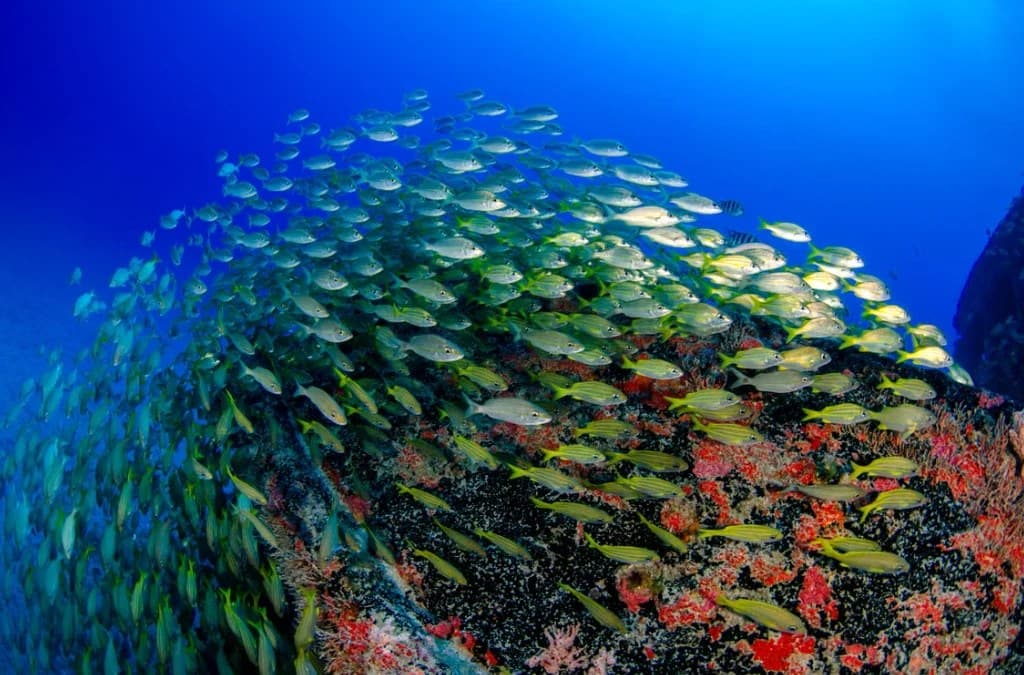
The Romanian wrecks shown here, however, lie in the oxygenated upper layer. They are exposed to corrosion, storms, nets, sediment and biological activity, so their condition keeps changing.
Before you descend
It is an environment with limited access, unstable structure and risks that grow with depth. A place's story deserves to be known before it is explored.
Deep diving and wreck exploration call for specific training, planning, good buoyancy control and equipment suited to local conditions.
Wrecks are historical witnesses and marine habitats. Do not move objects, do not force entry, and do not go inside without the right qualification and procedures.
A note for divers: depths and wreck conditions change. The information on this page is historical and indicative, and does not replace the local briefing, the dive plan or the assessment of conditions on the day.
The dossiers summarise public data from maritime archives, wreck databases, expedition reports and historical works, rewritten editorially.
The PADI Wreck Diver specialty prepares you properly for the next adventure.