
The beginner course
PADI Open Water Diver
Theory in Bucharest, pool in Bucharest, four dives in the Black Sea at Eforie Sud. At the end you are a certified diver, with a card issued by the world's largest diving organisation.
At a glance
The certification recognised worldwide that lets you dive to 18 m with a buddy, without an instructor.
- Minimum age
- 10 years (Junior between 10 and 14)
- Requirements
- Able to swim and in good physical condition
- Experience
- None required
- Maximum depth
- 18 m, with a buddy
- Structure
- Theory, pool, 4 open water dives
- Group size
- Usually no more than 6 students
What certification means
When you finish, you are a certified diver with a card recognised all over the world. You can buy scuba equipment and dive to 18 m with your own or rented kit, without an instructor or guide, just with a buddy. At new sites, most divers still prefer a guide.
Millions of people have learned to dive and explore the underwater world through this course.
You learn at your own pace
PADI Open Water Diver is performance-based. It takes as long as you need to understand and absorb the material, get comfortable in the water and perform the skills with ease.
The course has three modules that build on each other: theory, pool and open water.
1. Theory
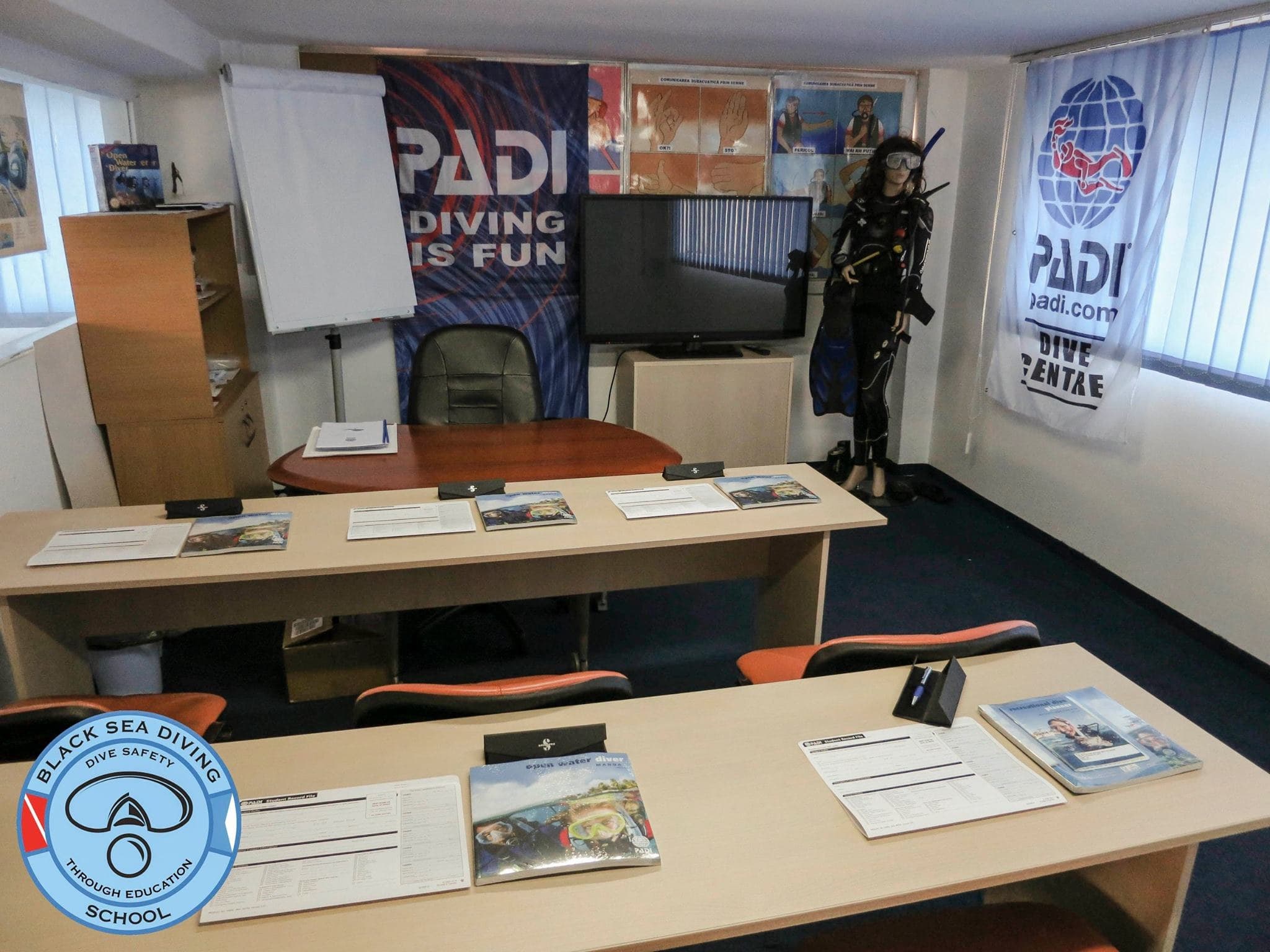
In the classroom or through PADI eLearning. We recommend the classroom: you are face to face with the instructor, can ask questions and learn more than the manual contains.
Sessions take place later in the day, usually in the evening, to fit around your working week. The manual has 5 sections, and classroom teaching is supported by a video presentation that makes learning easier.
- Equipment
- What SCUBA (Self Contained Underwater Breathing Apparatus) equipment is made of. Why we need a buoyancy compensator and weights at the same time. Why the mask covers your nose and how to equalise. Wetsuits versus dry suits. What a regulator is and how it works. Why cylinders hold compressed air, not oxygen. How to choose and look after your kit.
- Dive physics
- How gases behave under water pressure and how they affect us. Buoyancy. How sight and hearing change underwater. Different diving environments.
- Environment and safety
- Aquatic life, and how to prevent or deal with a problem.
- Planning
- Dive tables, the dive computer, and using a compass for simple navigation.
Each section ends with a review with your instructor. Theory closes with a 50-question final exam on the most important topics.
2. Pool
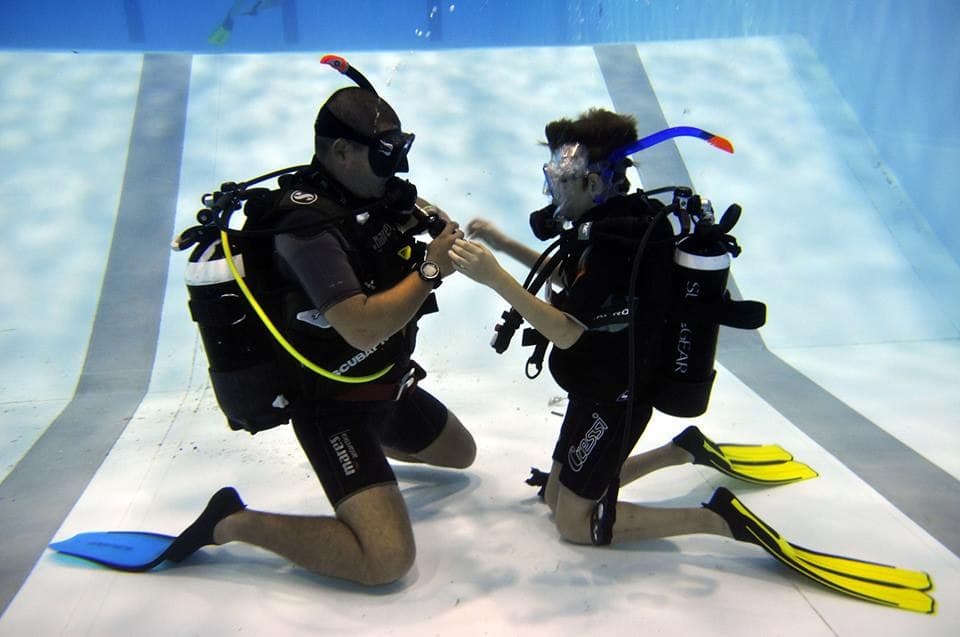
You put theory into practice and see the equipment at work, under your instructor's close guidance.
Buoyancy skills teach you to move underwater without touching the bottom or rising to the surface. You practise things you will use on every dive: clearing a fogged mask underwater, or taking the regulator out of your mouth to smile for a photo and recovering it safely.
- Assembling and disassembling your kit, and washing, drying, transporting and storing it.
- Weighting yourself correctly and dropping weights in an emergency for a safe ascent.
- What to do if you run out of air: your buddy's alternate air source or a controlled swimming ascent.
- What to do about a cramp, and much more.
If you are comfortable in the water, these skills are usually mastered in no more than two pool sessions.
3. The Black Sea
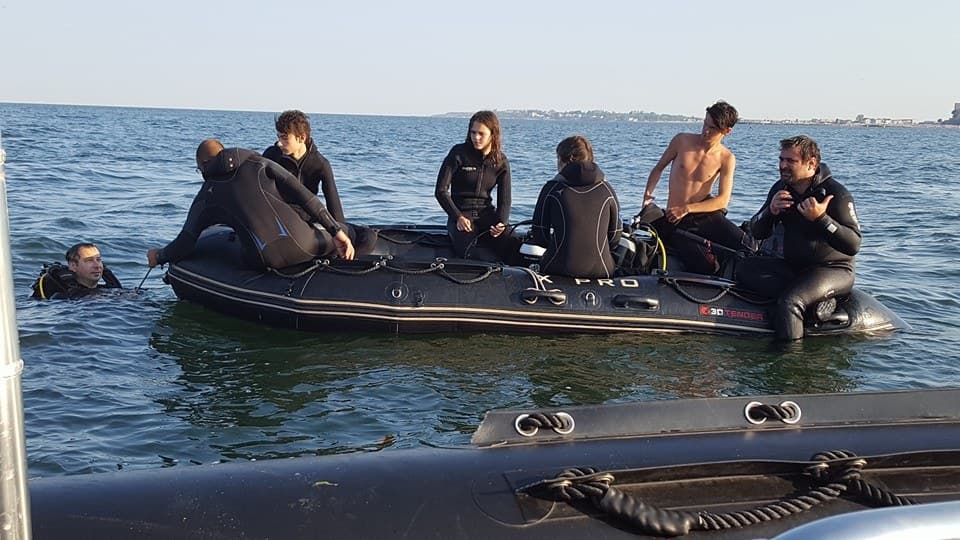
Four open water dives at our Eforie Sud centre, usually over one weekend, weather permitting.
You repeat the pool skills in the natural environment, among fish, crabs and shells. These dives are not all work: the first part is for settling in and skills, the second for exploring the life of the Black Sea.
Weather permitting, the first two dives are usually close to shore, entering from the beach, to a maximum of 6-7 m. The last two are from the boat in deeper water, to a maximum of 18 m. There you refine your buoyancy, build confidence and see different marine life from what lives near the shore.
By the end of the course you can plan and make a dive with a buddy, safely.
Travelling soon? Open Water Referral
Do the theory and pool with us, then complete your certification at any dive centre in the world with four open water dives.
Theory is covered in two classroom sessions, followed by pool dives in Bucharest. It is designed for anyone heading on a holiday somewhere warm who wants the PADI card without spending precious holiday time in a classroom. Call us for details.
A typical schedule
Weekday evenings: theory and pool. Weekends, all day Saturday and Sunday: the sea.
| Day | Where | Hours |
|---|---|---|
| Monday | Theory, online | 18:30-20:00 |
| Tuesday | Theory, online | 18:30-20:00 |
| Wednesday | Pool | 18:30-21:00 |
| Thursday | Pool | 19:30-22:00 |
| Saturday | Eforie Sud, dive centre | 10:30-18:00 |
| Sunday | Eforie Sud, dive centre | 09:00-16:00 |
The schedule may change. Groups are usually no larger than 6, so get in touch early. The course is also available one-to-one (VIP) at extra cost.
Equipment
You learn to use basic scuba equipment: mask, snorkel, fins, regulator, BCD, cylinder and more. The kit can vary with water temperature. During the course, the school provides all the equipment.
College credit
You may be able to earn college credit for the Open Water Diver course.
Video
PADI Learn to Scuba Dive
Frequently asked questions
How deep can I dive after the course?
To 18 m, with a buddy, without an instructor or guide.
What is the minimum age?
10. Children aged 10 to 14 take the Junior Open Water Diver version.
Can I do the theory online?
Yes, through PADI eLearning. We still recommend the classroom, where you can ask the instructor directly.
Where are the open water dives?
In the Black Sea at our Eforie Sud centre, usually over one weekend.
Ready to go down?
Call or write to us and we will find the right course and schedule together.